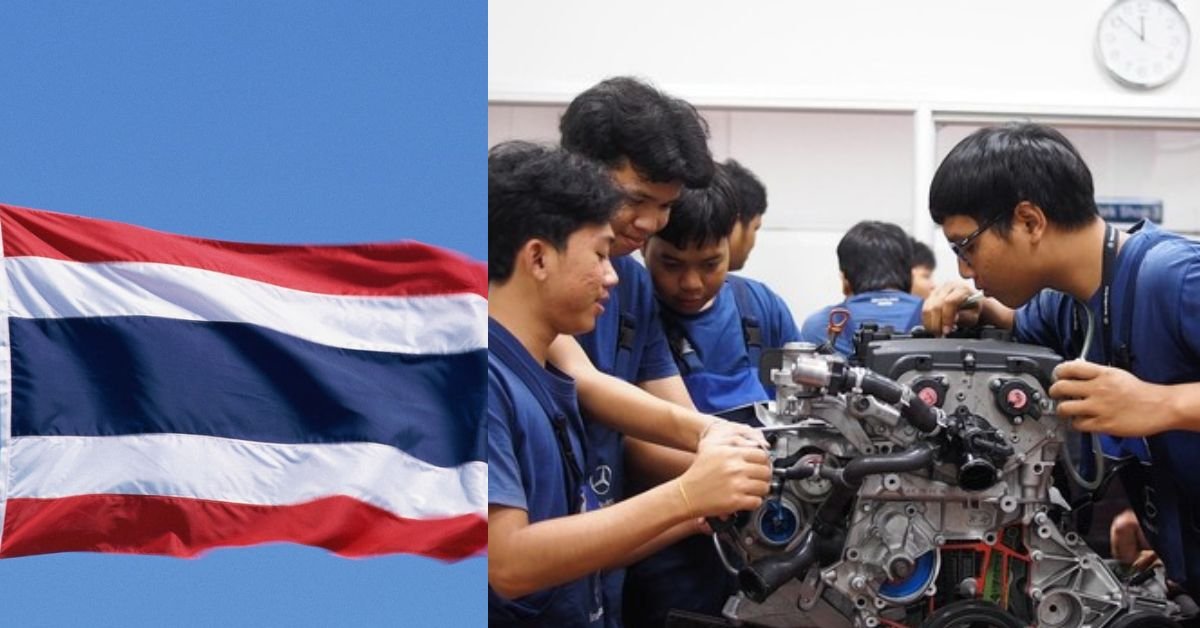
Thailand Hiring Unskilled Workers In 2025
You are a dreamer who is an unskilled worker and hopes to have a new life and a new career in the Land of Smiles. The Thai labor market is a complex environment particularly to those lack a specialized set of skills. It is everything you need to know in Thailand to hire unskilled workers in 2025, including legal regulations, as well as the most feasible areas of employment. We will not only offer evidence-based information and practical solutions to get you a legitimate and safe job but also to help you avoid many pitfalls.
Getting around Thailand Unskilled Labor Market
The Thai labor policies are geared more towards favoring Thai nationals in majority of the jobs especially in the unskilled labor sector. The legal structure of the country, which is controlled by the legislation, such as the Alien Working Act, in particular, leaves numerous manual and low-skill jobs to the citizens of the country. Nevertheless, it has some established avenues of entry of foreign workers, mostly via official government-to-government agreements, and in industries that are severely labor-deficient.
Laws & Regulations to Know
- Work Permit and Non-Immigrant Visa: This is not negotiable. Unskilled workers, all the foreign nationals, should secure a valid work permit in the ministry of labor and appropriate Non-Immigrant visa before employment. New e-work permit system will be implemented in 2025 and it will streamline this process by replacing the traditional blue book with a digital ID.
- Illegal Occupations: Thailand contains a list of occupations which are forbidden to foreigners. Such jobs as becoming a tour guide, selling hot dogs, and some kinds of construction work are many traditional manual and service jobs, and that is why they are listed here. Before, it is important to make sure that your preferred job has not appeared on this list.
- Government-to-Government Agreements: The most traditional and lawful path to the foreign unskilled labor, especially that of neighboring states such as Myanmar, Cambodia, and Laos is by means of official Memoranda of Understanding (MOUs). The agreements control migration of migrant workers and make their employment to be organized and in accordance to the Thai labor regulations.
Where Can Unskilled Foreigners Find Work?
Most of the doors are closed, but there still is a heavy dependence on foreign unskilled labor in particular industries and sectors. These normally include sectors where the Thai workers are scarce or areas where the work is physically challenging.
- Construction :Construction is one of the large employers of migrant workers. Although these are demanding jobs, they provide a steady supply of labor on a sustained basis on major infrastructural and construction projects throughout the country.
- Agriculture and Fisheries: The industries are especially dependent on foreign workers especially in the seafood and farming industries. Hiring is usually seasonal or project-oriented, and is normally regulated by certain rules.
- Manufacturing: Under a few conditions, some manufacturing plants, particularly the food processing plants and light assembly plants, can employ unskilled foreign workers. These are jobs that are usually a part of the supply chain of the giant exporting companies.
The 2025 Hiring Process Step-by-Step Guide
To become an unskilled foreign worker in Thailand, one has to follow the legal procedure. Any attempt to work without the right visa and work permit may attract harsh punishment such as fines, jail term, and deportation.
- Identify a Legal Employer: This employer should be a registered Thai company with a legal right to employ foreign employees.
- Acquire Non-Immigrant Visa: This will be done with the help of your employer. You will have to apply to a Thai embassy or consulate in your country of residence in Non-Immigrant B visa.
- Apply as a Work Permit: After coming in Thailand, your employer will file a work permit application on your behalf at the Department of Employment. The new e-work permit system is now to a large extent a digital process.
- Prepare the Documentation: You will have to prepare a variety of documentation, such as your passport, employment contract, and a medical certificate.
Statistic-Supported Research about Unskilled Labor in Thailand
By early 2025, Thailand has over 3 million registered migrant workers, most of them Myanese, Cambodian, and Laotian. This labor force is essential in such important industries as construction, farming, and industry. The government is still working on policies to ensure that this population is better managed; it lays emphasis on formalizing employment and enhancing the protections of workers.
FAQs
-
Can any foreigner easily find an unskillful job in Thailand?
No. Foreigners have a very hard finding unskilled labor in Thailand not unless they belong to the neighboring states under a particular government to government labor agreement.
-
Will a tourist visa allow me to work as a construction worker or farmhand in Thailand?
No. It is an offence to work on tourist visa. To legally work in any capacity under Non-Immigrant visa, you need to have a valid work permit and a Non-Immigrant visa as well.
-
What would occur to me in case I am caught working without my work permit?
You and your employer can be fined a lot and even be punished with imprisonment and expulsion, but there is a high likelihood that you will be blacklisted, and cannot come back to Thailand.
-
Does it have minimum wage laws to unskilled foreign workers?
Yes. Thai labor laws such as the minimum wage requirements apply to all legal workers both Thai and foreign.
-
What are the primary foreign unskilled worker problems in Thailand?
The key obstacles are associated with the complicated legal and bureaucratic procedures, the possibility of exploitation by unscrupulous employers, and linguistics.
Final Thoughts
Although the labor market in Thailand is highly regulated, there is a possibility of unskilled foreign workers getting legitimate jobs. The trick of the matter is that it is important to focus on the legal matter and not to make unofficial and unregulated agreements. With the help of the official contacts and acquainting yourself with the requirements, you will be able to establish a safe and secure career in Thailand. A good legal or employment agency should be consulted in case of any question regarding a particular job or firm.